Table of contents
Mass tourism is wobbling, and not just because of crowded airports and rising prices. From Venice to Bali, local authorities are tightening rules, residents are pushing back, and travellers are increasingly looking for something harder to mass-produce: time. That shift is feeding a quieter trend, slow travel, where the itinerary matters less than the immersion, and where “hidden” does not mean secret so much as overlooked. The question is whether moving slower truly unlocks new places, or simply reframes the same destinations.
Why “hidden” places vanish in a TikTok second
Can a destination stay hidden anymore? In practice, the lifespan of a “secret spot” has shortened dramatically, because the machinery of discovery has been industrialised, platforms reward novelty, geotags make replication effortless, and low-cost transport compresses distance into an impulse buy. The moment a viewpoint, a café, or a beach becomes a viral template, it stops being an experience and turns into a queue; what was once local knowledge becomes a global checklist in weeks, sometimes days.
Hard numbers underline the dynamic. International tourism has returned close to pre-pandemic levels, with UN Tourism reporting roughly 1.3 billion international tourist arrivals in 2023, about 88% of 2019, and 2024 trending higher in most regions. At the same time, cities that rely on tourism are openly managing congestion: Venice introduced a day-tripper access fee in 2024 on peak days, Amsterdam has pushed to curb nuisance tourism, and destinations from the Canary Islands to Kyoto are debating how to protect liveability. When travellers concentrate in the same handful of districts, “hidden” is not a geographical category, it is an algorithmic one, and the algorithm is brutally efficient.
Slow travel changes the incentives. If you stay longer, travel by rail or regional bus, and spend more time in one place, you are less dependent on a top-ten list and more likely to follow human recommendations, a conversation with a shop owner, a bulletin board in a neighbourhood café, or a seasonal festival that never makes it into viral feeds. The point is not to chase secrecy, but to reduce the footprint of the herd behaviour that makes places feel overrun.
Time is the real passport, not miles
What if the “hidden destination” is simply the one you have time to notice? Slow travel’s core promise is deceptively simple: by stretching the trip, travellers swap breadth for depth, and the payoff is often more cultural than scenic. A longer stay makes space for the mundane rhythms that short breaks miss, market days, school runs, local sports, commuter towns, and neighbourhoods that do not sell themselves in postcard angles. In that sense, slow travel is less about going off-grid and more about staying on the ground.
There is also an economic logic. Short stays can create high peaks of demand, drive up nightly prices, and push visitors toward the same central areas where supply is concentrated. Longer stays encourage different accommodation choices, including smaller guesthouses, rural rentals, or secondary cities connected by rail, and they distribute spending across more businesses, laundromats, bakeries, local guides, and independent museums. In Europe, where rail networks make multi-stop itineraries feasible without flying, night trains and cross-border services are expanding again, and while the system is far from seamless, it is increasingly viable for travellers willing to trade speed for continuity.
Even in far-flung destinations, the “time dividend” matters. In Japan, for example, the gravitational pull of Tokyo, Kyoto, and Osaka is strong, and the visitor boom has been visible in hotspots, yet the country’s regional networks open a different map once you stop treating the trip as a sprint. The Shinkansen makes distance feel short, but slow travel flips the question: instead of how quickly you can reach the next famous temple, it asks what happens when you choose one prefecture and commit to it, or when you plan around small-town festivals, local crafts, and hikes that require a full day rather than a half-hour slot.
How slow travel reroutes you, practically
Less rushing, more rerouting. The mechanics of slow travel are not mystical, they are operational, and they start with designing a trip that has slack, because slack is what lets you say yes to a detour. That means fewer overnight moves, choosing transport that connects you to places in between, and building days without “must-sees”. It also means shifting the research phase: instead of building an itinerary around the most photographed sites, you build it around geography, seasons, and everyday access, where the questions are practical, which train line stitches together small towns, where do locals go on weekends, what closes early, what is open on Mondays, and which areas reward walking.
Data points about travel behaviour help explain why this matters. In mature tourist markets, length of stay is one of the variables most closely tied to local spending patterns, because longer stays push visitors beyond the high-rent core. And overtourism studies repeatedly show that pressure is not just about total visitor numbers, it is about concentration by time and space, thousands arriving between 10 a.m. and 3 p.m. in the same blocks. Slow travel, by design, disperses time, it moves activity to mornings and evenings, and it shifts exploration to residential areas that are not built for tour-bus surges.
For travellers, the most useful tools are often unglamorous. Regional rail passes, local bus maps, community tourism offices, and neighbourhood-scale guides can outperform social feeds, because they are built around connectivity rather than hype. When planning Japan beyond the obvious circuit, resources like this article can help you visualise regions, understand how places link up, and spot destinations that are not hidden behind secrecy, but behind the simple fact that most people do not allocate enough time to reach them properly.
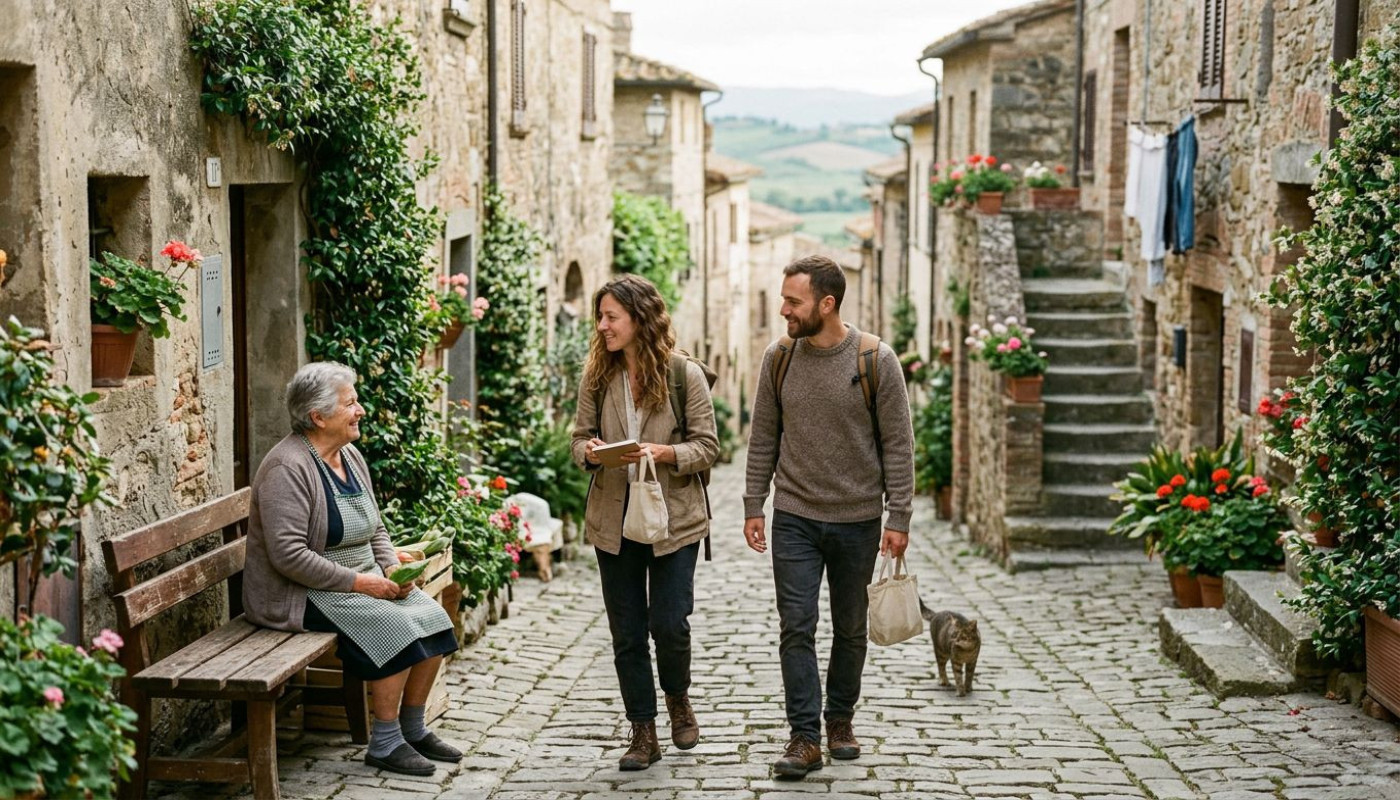
On the ground, the slow approach often looks like this: you base yourself in a smaller city for five or six nights, you do day trips by local lines, you eat where you end up rather than where you intended, and you let weather and conversations steer you. The “hidden” part emerges as a by-product, a ceramics town you only visited because the train stopped there, a coastal path you walked because the museum was closed, a family-run café you returned to because the owner remembered your order. None of that is guaranteed, but it is far more likely when you are not racing a schedule.
When slow travel fails, and how to avoid it
Slow travel is not a magic key. If everyone slows down in the same place, the pressure can intensify, because longer stays can reduce turnover and tighten accommodation supply, especially in small destinations where housing is already strained. The backlash against short-term rentals in many cities is a reminder that tourism’s benefits and costs are unevenly distributed, and that “authenticity” can become a slogan that masks displacement. A slow traveller who stays longer but occupies scarce housing in a fragile neighbourhood is not automatically a lighter footprint.
There is also the risk of romanticising the “hidden”. Some communities do not want to be discovered, and some places lack the infrastructure to handle even modest visitor growth, from waste management to water supply. Responsible slow travel means reading local signals, respecting rules, travelling off-peak when possible, and choosing businesses that are locally rooted. It also means being honest about motivation: if the goal is to post a new, “undiscovered” location, the behaviour may end up replicating the same extractive patterns, only with different coordinates.
Practical safeguards exist. Travelling in shoulder seasons spreads demand, booking accommodation that is clearly licensed reduces harm, and using public transport where it is robust lowers congestion in fragile areas. In destinations facing overcrowding, travellers can also redirect spending: visit lesser-known museums, eat outside the main tourist corridors, hire local guides in regions that want visitors, and avoid day-trip blitzes that bring crowds without meaningful economic return. Slow travel works best when it is paired with local awareness, not just personal comfort.
Before you book: budget, timing, and smart choices
Plan fewer stops, and price it honestly. Longer stays can lower daily costs, but transport, peak-season lodging, and regional scarcity can still bite; book early where supply is tight, and travel in shoulder months when possible. Check local tourism taxes and entry fees, then prioritise trains and buses, and look for passes or discounts that match your route.
Similar articles
Learning From Local Crafts: Activities That Shape Authentic Journeys
Itinerary Chaos Or Curated Adventure: What Shapes An Unforgettable Trip?

The Overlooked Link Between Visual Storytelling And User Engagement In Course Galleries

Unveiling the Mysteries of Siberian Shamanism